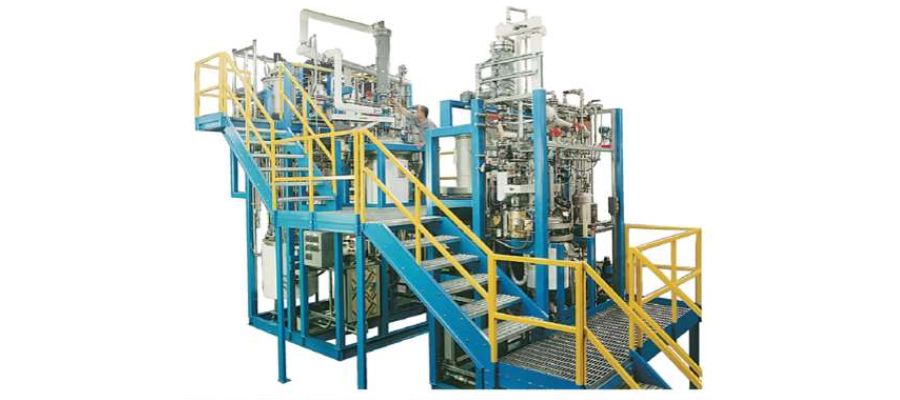
Pilot Plant
A pilot plant is a scaled-down version of a full-scale manufacturing facility. It's used to test and refine processes before commercial production begins. This is especially crucial in industries like chemicals and pharmaceuticals where product quality, safety, and efficiency are paramount.
• Key functions of pilot plants include:
• Process Development: Testing and optimizing chemical reactions, separations, and purification techniques.
• Scale-Up: Determining the best way to increase production from laboratory scale to commercial scale.
• Risk Assessment: Identifying potential hazards and safety issues before full-scale production.
• Product Testing: Evaluating product quality and consistency under real-world conditions.
• Regulatory Compliance: Gathering data needed for regulatory submissions.
• Faster time-to-market: Accelerating the development and commercialization of new products.
Benefits of using pilot plants
Reduced risk of failure:strong> Identifying and addressing potential problems before they occur in full-scale production.
• Improved process efficiency: Optimizing production processes to minimize costs and maximize yields.
• Enhanced product quality: Ensuring that products meet stringent quality standards.
• Faster time-to-market: Accelerating the development and commercialization of new products
Pilot plants play a vital role in the development and production of chemicals and pharmaceuticals.
They provide a bridge between laboratory research and commercial
manufacturing, ensuring the safety, quality, and efficiency of products.

